



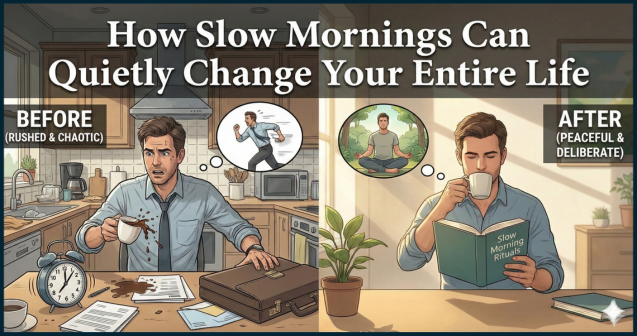
Most people begin their day in a rush.
An alarm goes off. The phone is checked immediately. Messages, news, and responsibilities flood the mind before the body has even fully woken up. By the time the day truly begins, stress has already taken control.
But psychologists and lifestyle experts say something surprising
The first hour of your morning often decides the emotional tone of your entire life.
Mornings Set the Pace for the Mind

The mind is most impressionable in the first moments after waking. Whatever you feed it becomes the foundation for the rest of the day.
Fast mornings train the brain to live in urgency.
Slow mornings teach the nervous system that it is safe.
People who adopt slower mornings often report feeling calmer, more focused, and less reactive not just during the day, but in life overall.
What Slow Mornings Actually Look Like

Slow does not mean unproductive. It means intentional.
A slow morning may include
Waking up without immediately checking your phone
Sitting quietly with a warm drink
Stretching or breathing deeply for a few minutes
Moving through tasks without rushing
Allowing silence before stimulation
There is no perfect routine. The power lies in presence, not perfection.
Why the Nervous System Responds So Positively
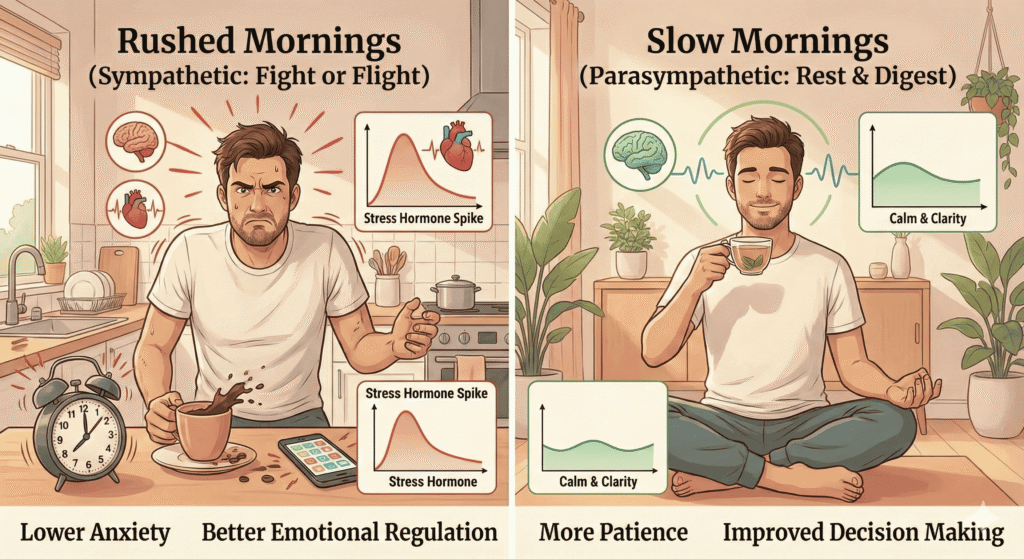
When mornings are rushed, the body enters a mild fight or flight mode. Stress hormones rise before the day even begins.
Slow mornings activate the parasympathetic nervous system, the part responsible for calm, digestion, and clarity.
Over time, this creates
Lower baseline anxiety
Better emotional regulation
More patience with others
Improved decision making
The body begins to trust the day instead of bracing for it.
The Quiet Impact on Mental Health
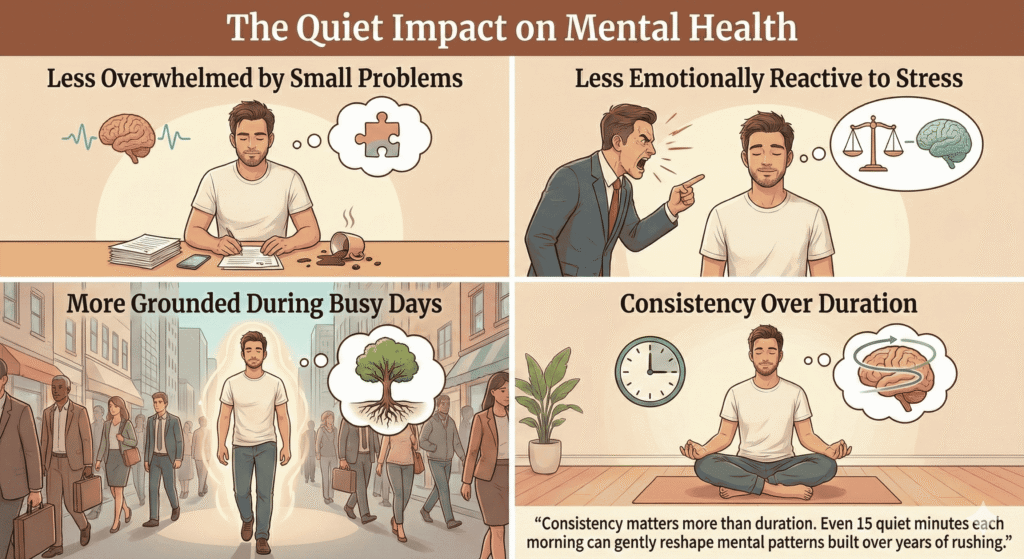
Many people notice subtle changes after a few weeks of slow mornings.
They feel less overwhelmed by small problems.
They react less emotionally to stress.
They feel more grounded, even during busy days.
A psychologist explains that consistency matters more than duration. Even 15 quiet minutes each morning can gently reshape mental patterns built over years of rushing.
Productivity Improves Without the Pressure
Interestingly, people who slow down in the morning often become more productive.
Without mental chaos, the brain works more efficiently. Tasks feel clearer. Focus improves.
Instead of constantly catching up, life begins to feel more intentional.
You stop chasing the day. You start leading it.
How Slow Mornings Change Life Over Time

The effects go beyond daily routine.
People report
Better sleep patterns
Healthier eating habits
More mindful communication
Stronger emotional boundaries
A deeper sense of self awareness
Slow mornings create space to listen to your own needs before the world starts making demands.
Starting Without Overhauling Your Life
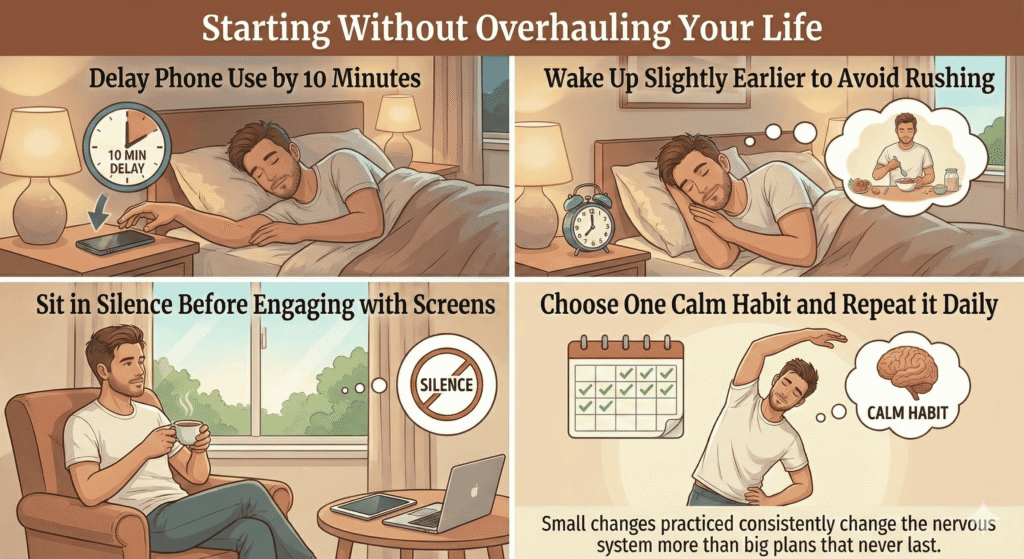
You do not need a dramatic lifestyle change.
Start with one small shift
Delay phone use by 10 minutes
Wake up slightly earlier to avoid rushing
Sit in silence before engaging with screens
Choose one calm habit and repeat it daily
Small changes practiced consistently change the nervous system more than big plans that never last.
A Gentle Truth
Life does not usually change through dramatic moments. It changes through quiet patterns repeated daily.
Slow mornings are not about doing less. They are about living more consciously.
When you stop rushing the beginning of your day, you slowly stop rushing your life.
And that quiet shift can change everything.