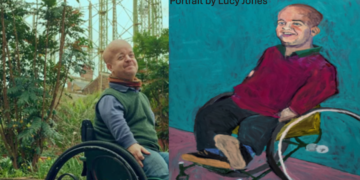






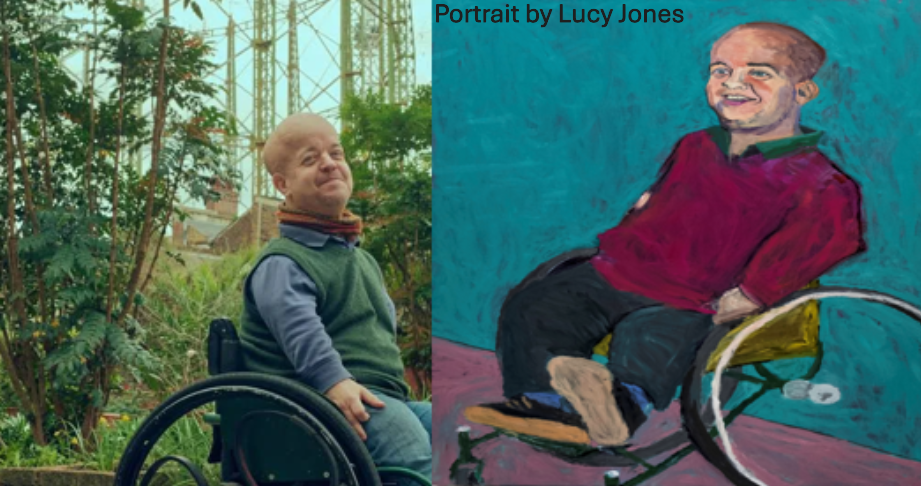
In a world where people are often judged within seconds, individuals with visible physical differences frequently face a lifetime of assumptions before they even speak. For those born with dwarfism, the challenge is not only physical—it is deeply social, psychological, and systemic. Tom Shakespeare, a British sociologist, bioethicist, and global disability rights advocate was born with a form of dwarfism. Shakespeare grew up in a society that often tried to define his limitations before he had the opportunity to define his own potential. From an early age, he experienced what many people with disabilities face daily—being underestimated, being questioned, and being placed into categories that had nothing to do with their actual abilities. But unlike many who are forced to silently accept these limitations, Tom Shakespeare chose a different path. He chose to question the system itself.
Growing Up in a World That Assumed “No” Before Asking “How”
For many individuals with dwarfism, the struggle begins long before professional life. It begins in classrooms, in public spaces, and even within social circles where expectations are quietly lowered. People may not always say it out loud, but the message is often clear: “There are certain things you cannot do.” These assumptions are rarely based on evidence. Instead, they are based on discomfort, lack of exposure, and outdated ideas of what ability looks like. Tom Shakespeare grew up in this environment, but rather than internalizing these limitations, he began to analyze them. He observed how society treated people with disabilities—not just physically, but structurally. Why were buildings not accessible? Why were opportunities limited? Why were people judged before being understood? These questions would later shape his entire career.
Education became his foundation. Shakespeare pursued higher studies and eventually entered the field of sociology, where he began exploring disability not as a personal tragedy, but as a social construct. This was a radical shift in thinking at the time. Instead of asking, “What is wrong with the individual?” he asked, “What is wrong with the system that excludes them?”
From Personal Experience to Global Impact
Tom Shakespeare did not take the traditional route of becoming a medical doctor, but his work has had a profound impact on healthcare systems, disability rights, and global policy. He became a leading academic in disability studies and later worked with the World Health Organization, contributing to discussions around disability, healthcare access, and inclusion. His work challenged one of the most deeply rooted misconceptions in society: that disability is purely a medical issue. Instead, he argued that disability is largely shaped by social barriers—lack of access, lack of inclusion, and lack of understanding.
This perspective transformed how institutions approached disability. It shifted the focus from “fixing the individual” to “fixing the environment.” Hospitals, universities, and workplaces began to rethink their policies, not because of one dramatic moment, but because of continuous pressure from advocates, researchers, and real-life experiences like Shakespeare’s.
The Legal Landscape: How Systems Were Forced to Change
Across the United Kingdom and beyond, disability rights have been strengthened through legislation such as the Equality Act 2010, which protects individuals from discrimination in education, employment, and public services. These laws did not appear overnight. They were the result of years of advocacy, legal challenges, and individuals refusing to accept exclusion.
Many cases brought forward by people with disabilities have forced institutions to reconsider their standards. Universities have had to adjust admission policies. Employers have had to provide reasonable accommodations. Healthcare systems have had to ensure equal access. These changes reflect a fundamental shift in thinking: that opportunity should be based on capability, not assumption.
Tom Shakespeare’s work has played a crucial role in reinforcing these ideas. By providing academic evidence and policy recommendations, he helped bridge the gap between legal frameworks and real-world application.
Redefining Ability in Healthcare and Society

One of the most powerful aspects of Shakespeare’s journey is how it reshaped the definition of ability. In fields like medicine, where physical performance is often emphasized, individuals with dwarfism are frequently judged before they are evaluated. Questions about reach, strength, or mobility are raised, sometimes without considering adaptive tools or alternative methods. However, modern healthcare increasingly recognizes that effective doctors are not defined by physical traits alone. They are defined by knowledge, decision-making, communication, and empathy.
Through his work, Shakespeare has highlighted that diversity—including physical diversity—strengthens professional environments. Patients benefit from doctors who understand different life experiences. Systems become more inclusive when they are designed for a wider range of people. And most importantly, individuals who were once excluded gain the opportunity to contribute meaningfully.
Changing Perception — One Conversation at a Time
Unlike viral stories that focus on a single dramatic turning point, real change often happens gradually. It happens through conversations, research, policy changes, and everyday interactions. Tom Shakespeare’s influence has been built over years of consistent work—writing, teaching, advising, and advocating. He has helped shift the narrative from pity to respect, from limitation to capability.
This transformation is not just about one individual. It reflects a broader movement where people with disabilities are no longer passive participants in society. They are leaders, professionals, and decision-makers. They are shaping the systems that once excluded them.
The Broader Lesson: Ability Is Not What You See
The story of Tom Shakespeare is not just about dwarfism. It is about perception. It is about how quickly society forms opinions based on appearance, and how slowly it sometimes recognizes true ability. His journey reminds us that success is not always about dramatic victories. Sometimes, it is about persistent effort, intellectual contribution, and the courage to challenge deeply rooted beliefs.
For aspiring professionals—whether in medicine, business, or any field—the lesson is clear: your value is not determined by how you look, but by what you bring. Systems may take time to change, but they do change. And often, it is individuals like Shakespeare who make that change possible.


