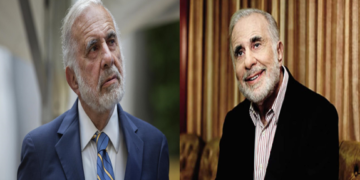






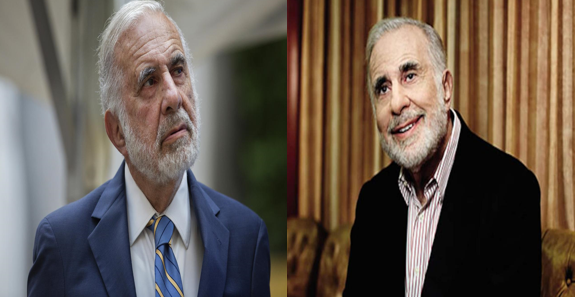
At 26 years old, Carl Icahn was broke.
Not “tight on cash” broke. Not “waiting for payday” broke.
Completely wiped out.
The kind of broke where you sell your car just to afford food.
Now fast forward five decades.
At 76 years old, Icahn made $2 billion from a single investment.
Let that sink in.
This isn’t just a story about money. It’s about ego, failure, brutal self-awareness, and mastering the game most people never understand.
If you’re building a business, climbing out of debt, or trying to level up financially—this story hits differently.
Humble Beginnings in Queens
Carl Icahn was born in Queens, New York, into a modest household. His parents were schoolteachers—educated, disciplined, but far from wealthy.
Eating out at restaurants wasn’t part of life. Luxury wasn’t even a conversation.
But Icahn had something else: ambition paired with an edge.
He made his way into Princeton University—one of the most prestigious schools in the world. But getting in was only half the battle.
Staying there required hustle.
Icahn funded parts of his education through poker games and small side jobs. He wasn’t just studying economics—he was learning risk, psychology, and decision-making in real time.
That combination would later define his entire career.
Early Success… and a Dangerous Illusion
After graduating, Icahn eventually became a stockbroker in 1961.
And things took off.
He started making money—fast.
Inexperienced investors often mistake early success for skill. Icahn was no exception. As profits grew, so did his confidence.
He believed he had cracked the code.
But what he didn’t realize was this:
He wasn’t a genius. He was riding a bull market.
And markets have a way of humbling people who confuse luck with intelligence.
The 1962 Stock Market Crash: A Brutal Reality Check
Then came 1962.
The market crashed.
Hard.
Icahn lost everything.
His capital? Gone.
His confidence? Shattered.
His identity as a “smart investor”? Destroyed.
It got so bad that he had to sell his car just to survive.
Most people never recover from a moment like this.
They retreat into safety. They avoid risk. They rebuild slowly—if at all.
But Icahn did something different.
He asked a question most people avoid:
“What did I get wrong?”
The Insight That Changed Everything
Instead of blaming the market, Icahn turned inward.
He realized a harsh truth:
“I thought the bull market was my brain.”
That one realization separated him from the crowd.
Because the real shift wasn’t financial—it was psychological.
He began to understand:
- The difference between luck and skill
- The importance of risk management
- The dangers of emotional decision-making
And most importantly:
Markets reward discipline, not ego.
Reinvention Through Strategy: Enter Options Trading

Instead of quitting, Icahn doubled down—but this time with a new mindset.
He moved into options trading, a complex and high-risk area of the market that requires precision and deep understanding.
This wasn’t gambling.
This was calculated risk.
In 1968, Icahn launched his own firm. But unlike his earlier days, he now had a system:
- Analyze deeply
- Act decisively
- Control downside risk
- Remove emotion
He wasn’t chasing quick wins anymore.
He was building repeatable advantage.
The Rise of the Corporate Raider
Icahn didn’t just invest in companies.
He targeted them.
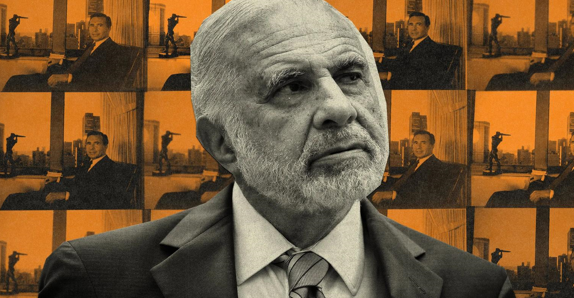
Specifically, he looked for businesses that were:
- Undervalued
- Poorly managed
- Structurally inefficient
Then he would buy a significant stake and push aggressively for changes.
This approach earned him the label:
“Corporate Raider.”
To some, he was ruthless.
To others, he was a necessary force of accountability.
One of his most famous moves involved Trans World Airlines (TWA), where he extracted hundreds of millions in value.
But Icahn wasn’t interested in public opinion.
He cared about results.
Hollywood, Power, and Influence
Icahn’s bold, unapologetic style didn’t go unnoticed.
His persona helped inspire the iconic character Gordon Gekko in the film Wall Street—a symbol of aggressive capitalism.
While dramatized, the comparison highlights how influential Icahn became.
He wasn’t just participating in the market.
He was shaping it.
The Icahn Lift: When One Investor Moves Markets
Over time, Icahn’s reputation became a market signal.
When he invested in a company, investors paid attention.
Stocks often surged simply because of his involvement.
This phenomenon became known as:
“The Icahn Lift.”
From 1968 to 2011, Icahn generated an average annual return of approximately 31%.
That level of consistency over decades is extremely rare.
Billion-Dollar Moves: Netflix and Apple
Icahn’s later career proved that his edge didn’t fade with time—it sharpened.
Netflix Bet
When many investors were uncertain about Netflix, Icahn saw opportunity.
He invested heavily—and walked away with an estimated $2 billion profit.
Apple Activism
Icahn also took a significant position in Apple and pushed for share buybacks.
His pressure influenced corporate decisions, unlocking massive shareholder value—and again, billions in gains.
These weren’t lucky bets.
They were calculated, strategic, and backed by decades of experience.
The Real Lesson: Your “Crash” Is Your Advantage
Everyone experiences a “1962 moment.”
- A failed business
- A job loss
- A financial setback
- A confidence collapse
The difference isn’t the event.
The difference is the response.
Most people:
- Avoid risk after failure
- Play small
- Settle for stability
But high performers do something else:
- They analyze deeply
- They extract lessons
- They return stronger
Icahn didn’t succeed despite failure.
He succeeded because of it.
Key Takeaways for Entrepreneurs and Investors
If you’re building something—whether it’s a startup, a freelance career, or an investment portfolio—here’s what Icahn’s story teaches:
1. Early Success Can Mislead You
Don’t confuse a good environment with personal brilliance.
2. Failure Is Data
Every loss contains information. Extract it.
3. Ego Is Expensive
The market punishes overconfidence quickly.
4. Risk Must Be Understood, Not Avoided
Avoiding risk doesn’t build wealth. Managing it does.
5. Influence Is Leverage
At higher levels, success isn’t just about capital—it’s about control and impact.
Key Lesson : Redefine Your Lowest Point
That moment you’re embarrassed about…
That failure you don’t talk about…
That setback you wish never happened…
It might be the most important event of your life.
Carl Icahn’s lowest point—selling his car to survive—wasn’t the end of his story.
It was the beginning of his transformation.


