






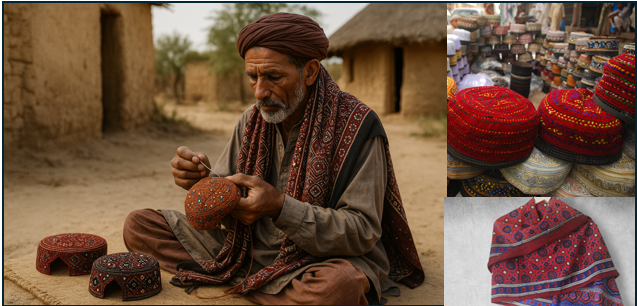
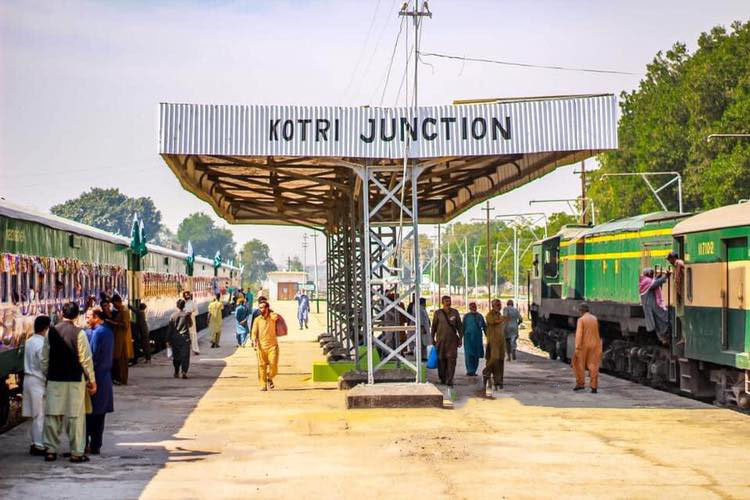
Introduction: Arrival in Sindh: As my train crossed the arid plains of southern Pakistan, the first thing I noticed was the earthy smell of dust mingling with the aroma of chai being poured in clay cups. I had arrived in Sindh—a province not only known for its history of the great Indus Valley Civilization but also for its vibrant culture, handicrafts, and warmth of its people.
Sindh is more than just a land of history; it is alive with color, music, and traditions that have been carefully preserved for centuries. Among its most iconic cultural treasures are the Sindhi Topi (cap) and the Ajrak (block-printed shawl). Worn with pride, these items are more than just clothing—they represent the identity of Sindh and are deeply tied to its heritage.
In my journey across Sindh—from bustling Hyderabad to the calm villages around Hala, Bhit Shah, and Khairpur—I had the chance to witness firsthand how the Sindhi topi is made, how Ajrak is block-printed, and how these crafts reflect the philosophy and resilience of a people whose roots run deep in history.
The Sindhi Topi: A Crown of Identity
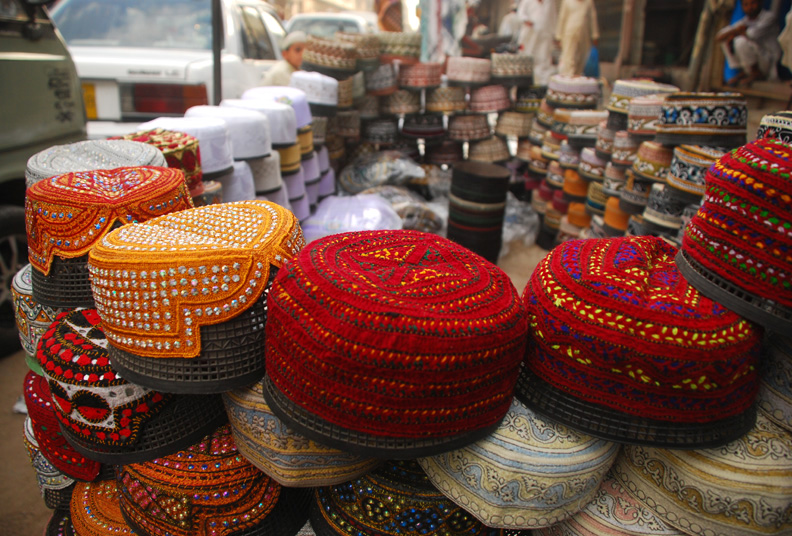
The Sindhi topi is not just a head covering; it is a crown of dignity. The round, intricately embroidered cap, often featuring mirror work and symmetrical patterns, is an unmistakable marker of Sindhi identity. I first saw it in the busy bazaars of Hyderabad, displayed in rows at shopfronts, each piece glimmering under the sun.
One shopkeeper told me, “For us Sindhis, the topi is respect. It is love. When we place it on someone’s head, it means we honor them.”
The Sindhi Cultural Day, celebrated every December, is when streets across Sindh and even beyond come alive with thousands wearing Ajrak and Topi. This tradition alone speaks volumes about the love people have for these cultural symbols.
Crafting the Sindhi Topi: A Labor of Love
Curious to see how the topi was made, I traveled to a small village outside Hala, known for its craftsmen. Inside a mud house with sunlight streaming through small openings, I met Abdul Rehman, a 55-year-old craftsman whose family had been making Sindhi topis for generations.
The process, I learned, is painstakingly detailed:
- Base Structure – The cap begins with a sturdy cotton or fabric base, often circular with a slight opening in the front (to make it easy to wear).
- Embroidery – Using fine threads of silk and cotton, artisans create elaborate geometric and floral patterns. Each stitch is made by hand, requiring precision and patience.
- Mirror Work – Tiny mirrors are carefully stitched into the cap, catching light and adding sparkle.
- Finishing Touches – Borders are reinforced, and the cap is shaped perfectly to sit on the head.
I was stunned to learn that a single topi can take anywhere between 7 to 15 days to make, depending on complexity. The artisans often work for hours at a stretch, guided only by memory and tradition—there are no stencils or machine aids. Each topi is, therefore, a piece of art, carrying the soul of its maker.
Abdul Rehman told me with pride, “This is our identity. Even if the world changes, we Sindhis will never let the topi die.”
Ajrak: The Pride of Sindh
Alongside the Sindhi topi, the Ajrak is another iconic symbol. It is a block-printed shawl, usually in shades of deep red, indigo, and white, adorned with symmetrical patterns that speak of nature and philosophy.
I traveled to the town of Hala, famous for its Ajrak printing. There, I met artisans who showed me the centuries-old technique of block printing:
- Preparing the Fabric – Cotton is washed, soaked, and treated with natural ingredients to make it ready for dyeing.
- Block Printing – Wooden blocks, carved with intricate patterns, are dipped into natural dyes and pressed onto the fabric repeatedly, creating mesmerizing designs.
- Dyeing – The fabric is dyed using indigo and madder, creating the deep blues and reds that Ajrak is known for.
- Sun-Drying and Washing – Finally, the cloth is laid out in the sun to dry, giving it a rich texture.
Each Ajrak tells a story, and its making is an art passed down through generations. It is not just cloth; it is philosophy—representing the harmony between humanity and nature.
Villages and Handicrafts: Where Time Stands Still
Traveling deeper into Sindh, I reached Bhit Shah, the resting place of the Sufi poet Shah Abdul Latif Bhittai. The village was alive with folk singers singing his verses, while many wore Ajraks draped over their shoulders.
Nearby, in villages where women sit together on charpoys (woven beds) in courtyards, I saw them embroidering not only topis but also other handicrafts—ralli quilts, wall hangings, and shawls. Their hands moved rhythmically, weaving colors into fabric with unmatched skill.
These villages are living museums. Modernity has touched them, but the essence of tradition remains intact. Children run around in fields while artisans quietly stitch heritage into every thread.
Distribution Across the Country
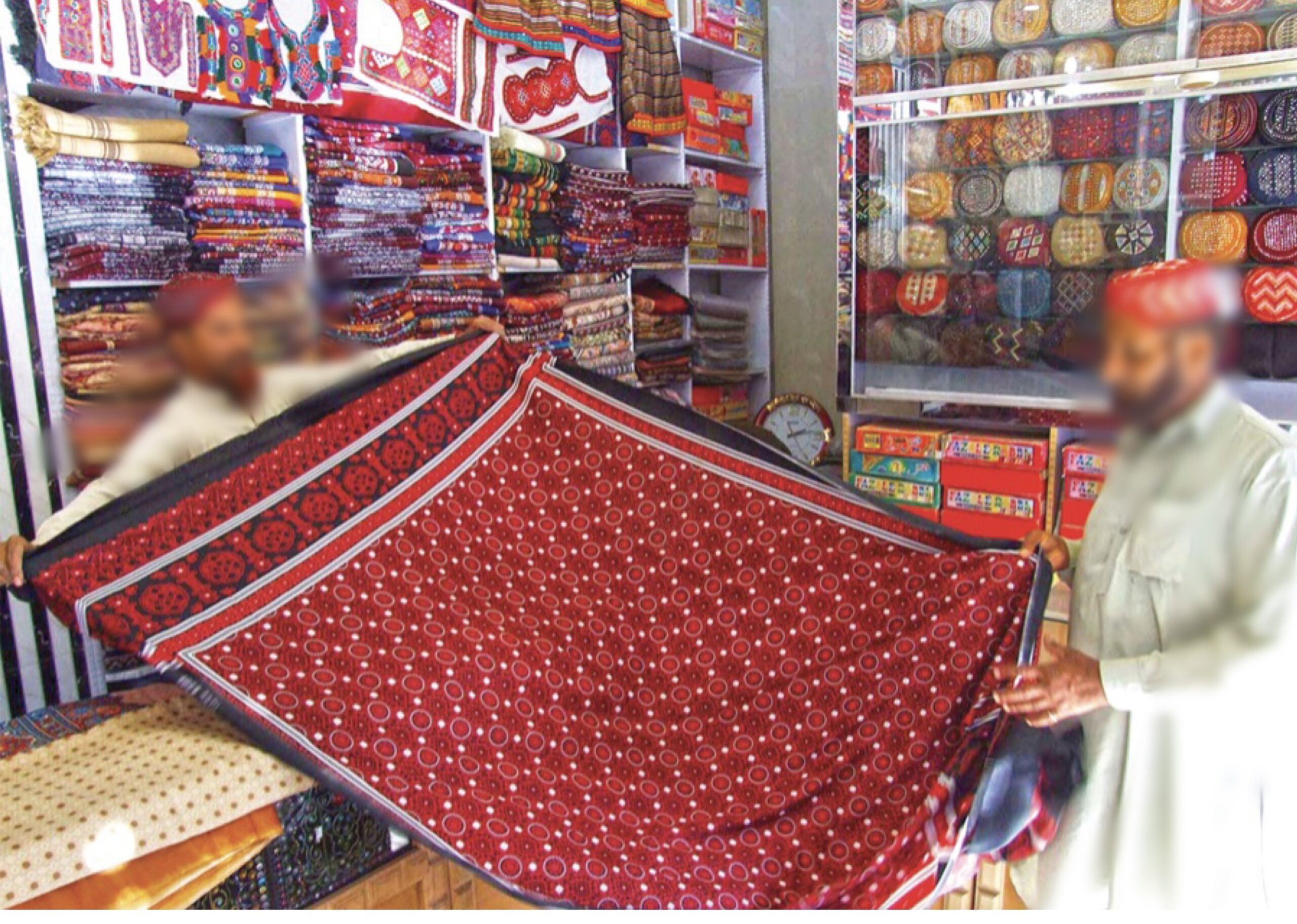
What fascinated me most was how widely the Sindhi topi and Ajrak are loved—not just in Sindh but across Pakistan. In Karachi, I saw young professionals proudly wearing Ajraks in offices. In Lahore and Islamabad, I met students who had bought Sindhi topis during cultural festivals.
The items are also exported abroad, especially to countries with large Pakistani communities like the UK, USA, and UAE. For many overseas Sindhis, owning an Ajrak or topi is a way to stay connected to their roots.
Festivals and Cultural Celebrations
I had the chance to witness a Sindhi Cultural Festival during my stay. Streets were decorated with banners, music filled the air, and stalls displayed Ajraks, topis, and other handicrafts. People danced to Sindhi folk tunes, dhol beats echoed across the ground, and children paraded in colorful attire.
The highlight was when elders placed Sindhi topis on the heads of guests—a gesture of honor and love. It was a moment that captured the true essence of Sindh: hospitality, respect, and joy.
The Colors and Meaning Behind Them
The Sindhi topi and Ajrak are deeply symbolic. The geometric designs often represent unity and balance. The mirrors reflect light, symbolizing brightness and truth. The red and indigo shades of Ajrak represent earth and sky, tradition and eternity.
Wearing them is not just about fashion—it is about carrying philosophy and heritage.
Challenges to Tradition
While the crafts are beautiful, they face challenges. Many artisans told me that younger generations are less interested in continuing the tradition because machine-made caps and printed cloths are cheaper and faster to produce. Genuine handmade topis and Ajraks often cost more, making it difficult for artisans to survive.
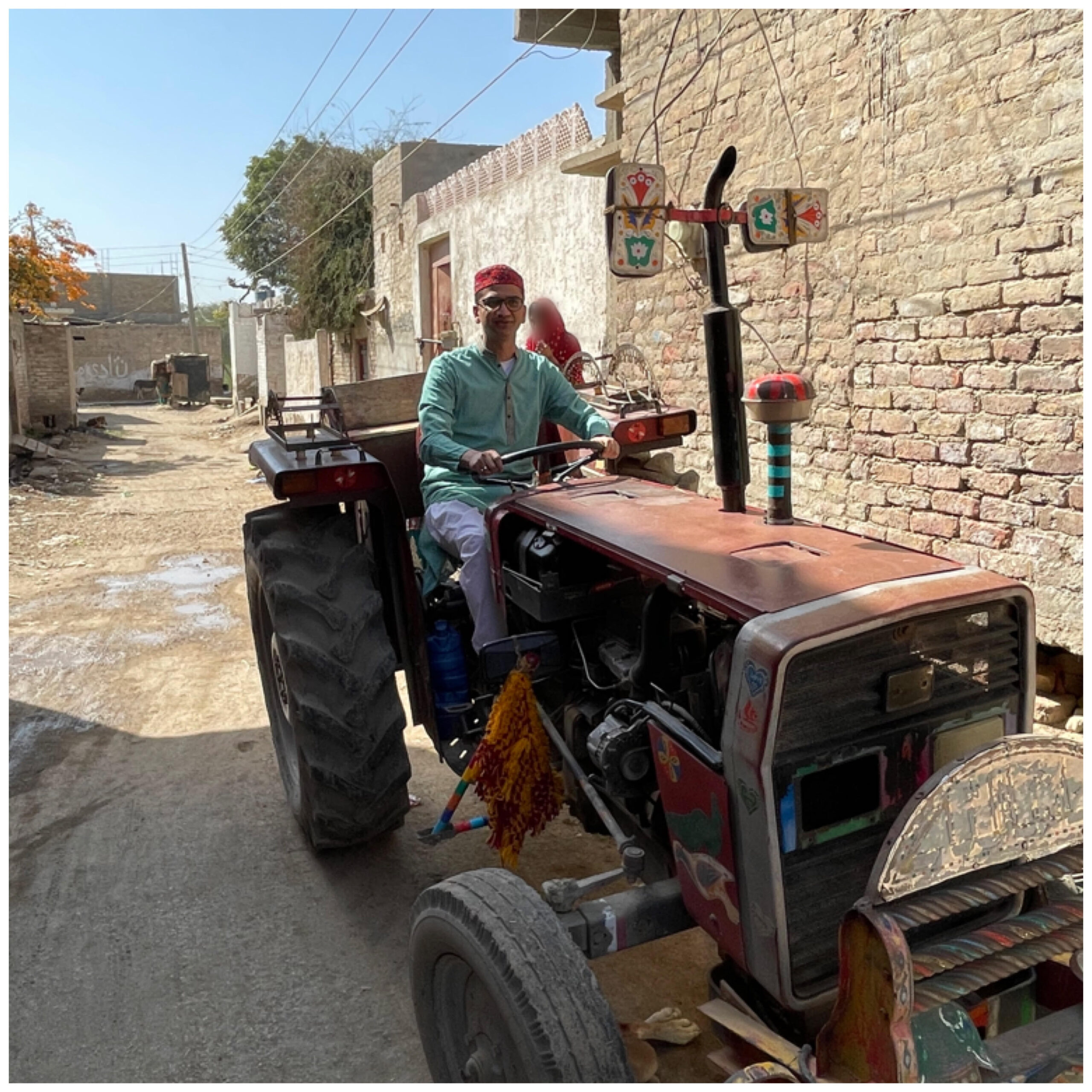
However, cultural organizations, NGOs, and even the Sindh government have started initiatives to preserve and promote these crafts. Cultural days, international exhibitions, and online platforms are helping artisans showcase their work to the world.
The People’s Love for Their Culture
In every town and village I visited, one thing was constant: the people’s deep love for their heritage. Whether it was a child wearing a small topi at school or an elder wrapping an Ajrak around his shoulders during prayer, the pride was visible.
I met a young student in Hyderabad who told me, “When I wear Ajrak to university, my friends ask me about Sindh. It makes me proud to represent my culture.”
This love is what keeps the tradition alive, ensuring that the Sindhi topi and Ajrak will never fade away.
A Journey Beyond Travel
As I packed my bags to leave Sindh, I folded the Ajrak I had bought from Hala and carefully placed the Sindhi topi in my bag. They were not just souvenirs; they were living reminders of the people I had met, the villages I had seen, and the culture I had experienced.Traveling through Sindh taught me that culture is not just something you see—it is something you feel. The Sindhi topi and Ajrak are more than fabric and thread; they are love, dignity, and history woven together.



Maa Shaa Allah.
V r proud of our motherland Sindh.