






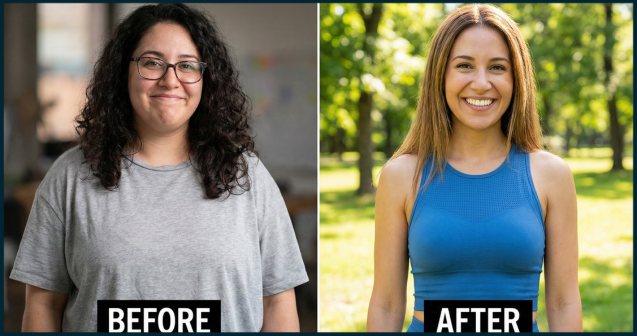
“I Had to Decide for Myself”
“Nothing anyone else said to me really mattered,” Maggie says. “It didn’t click until I decided for myself that I needed to do something about my weight and that it was worth the effort.”
Maggie had lost weight before, years earlier. Like many people who go on diets, she managed to shed some pounds, but she couldn’t keep them off. Her approach was strict and punishing. She didn’t eat enough, which left her constantly hungry. And she cut out the foods she genuinely loved, especially pizza. Eventually, the hunger and frustration caught up with her, and the weight returned.
When Dieting Stopped Working

What changed wasn’t just what she ate, but how she thought about food and health. Over time, Maggie lost 50 pounds and reached her goal weight. Along the way, her blood pressure dropped, her blood sugar levels improved, and something unexpected happened her asthma symptoms disappeared.
“I’ve always had this all-or-nothing mindset,” says Maggie, a nurse. “I’d be extremely strict, barely eating enough, and then I’d get so hungry that I’d end up bingeing on pizza or whatever I’d been avoiding. I wanted fast results, but the plan was too rigid to stick with.”
The Moment It Became a Lifestyle

Eventually, Maggie realized the problem wasn’t her willpower it was the idea that this was temporary.
“I finally understood that this couldn’t be a short-term thing,” she says. “It wasn’t about being ‘good’ until the weight came off. If I wanted to keep it off, I had to keep doing the same things. I couldn’t go back to my old habits just because the scale changed.”
That realization shifted everything. What she was building wasn’t a diet anymore it was a lifestyle. The idea that she could someday return to the way she used to eat simply stopped making sense.
Why Change Is So Hard

Maggie knows firsthand how difficult lifestyle change can be, and she also understands that readiness matters.
“Nothing anyone said to me had any impact until I decided I was ready,” she says. “People don’t change until they see a reason and are willing to put in the work. Some people want to lose weight, but they’re not ready yet. And that’s okay it’s a big commitment.”
For Maggie, changing how she ate was harder than quitting smoking. “Food is everywhere,” she says. “It takes time, planning, energy. It’s hard work. But it’s also one of the most fulfilling things I’ve ever done.”
Starting Small, One Meal at a Time
She began by joining a weight-loss program and setting clear goals. Her long-term goal was to lose 50 pounds, but instead of focusing on that intimidating number, she broke it down. One or two pounds a week. One meal at a time. She also slowly began adding more movement into her days.
Over time, her relationship with food changed so deeply that she now notices when she doesn’t eat well.
“I don’t feel good anymore if I don’t eat right,” she says. “And when I say ‘right,’ I mean healthy not perfect.”
Learning to Eat with Awareness

Rather than following rigid rules, Maggie focused on awareness. She stopped eating the way she used to and started making daily choices.
“Some days I eat more than others, and that’s okay,” she says. “What matters is paying attention.”
She learned to read nutrition labels, cut back on added sugars, and replace sweet cravings with whole fruit. She stopped drinking sugary sodas and bottled teas. She made sure her meals were balanced and kept track of what felt satisfying rather than restrictive. Most importantly, she created a mental list of foods that were “worth it” to her.
When Health Began to Slip Away

As her weight had increased over the years, Maggie noticed her physical world shrinking. Activities she once loved became harder.
“I’m an old backpacker,” she says. “I love hiking and cross-country skiing. But it got to the point where I was always out of breath and way behind everyone else. I just wasn’t enjoying it anymore.”
Her health numbers were also creeping in the wrong direction. Her blood pressure and blood sugar were higher than she and her doctor wanted. And the extra weight made her asthma worse.
“The more weight I carried, the harder it was to breathe,” she says. “It affected everything I did.”
The Turning Point
Those concerns along with her desire to enjoy the outdoors again gave her the motivation she needed.
As the weight came off, her energy returned. She felt stronger.
“After losing about 35 or 40 pounds, I was sprinting up hills without even thinking about it,” she says. “It was unbelievable.”
The Unexpected Bonus
The biggest surprise came quietly. Her asthma symptoms faded.
“I noticed I wasn’t wheezing when I exercised,” she says. “I wasn’t having breathing trouble anymore. Over time, it just kept getting better. I don’t need inhalers now.”
Making Room for “Worth-It” Foods
Despite all the changes, Maggie didn’t give up the foods she loved. She still eats pizza and the occasional hamburger but less often and in smaller portions.
“Those are my worth-it foods,” she says. “I just choose them intentionally.”
She also learned to modify favorites. Instead of fast-food bacon cheeseburgers, she makes lean hamburgers at home. Instead of several slices of pizza, she enjoys one slice with a large salad.
Planning, Not Depriving

Eating out is still part of her life. She plans ahead. If she knows there will be cake at a party, she decides in advance whether she wants a piece.
“Telling myself I’d never eat cake again would backfire immediately,” she says. “Deprivation just makes cravings louder.”
At restaurants, she often asks the server to pack half her meal before it arrives. She orders grilled foods, avoids heavy sauces, and chooses vegetables without butter. Her taste buds, she says, have changed but slowly.
Moving for Life, Not Punishment

Exercise became a support system rather than a punishment.
Maggie now works out for about 45 minutes, three to four times a week. She uses a recumbent bike, hikes in warmer months, skis in winter, and practices yoga for flexibility and calm.
She started slowly just ten minutes at a time and built up gradually.
“Yoga surprised me,” she says. “It’s calming, and the stretching helps more than I expected.”
The Power of Encouragement
Although Maggie did the hard work herself, encouragement from others helped reinforce her changes. Friends noticed how she ate and how she lived.
“People would say, ‘You really eat healthy,’ or ask how I did it,” she says. “That support mattered.”
A Journey That Lasted
Maggie’s story, shared through an interview, reflects a journey that didn’t rely on perfection or speed. It was built one decision at a time grounded in patience, readiness, and a shift from dieting to living.