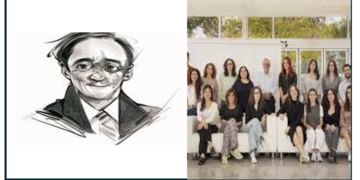






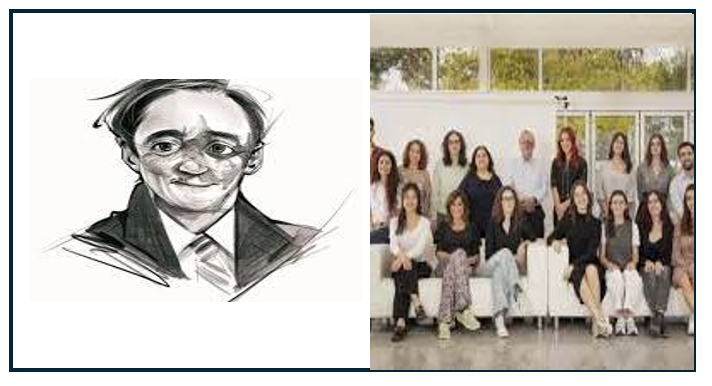
In the world of scientific discovery, some names rise quietly—not built on fame, but on decades of relentless dedication, sleepless nights, and an unshakable belief that knowledge can save human lives.
One of those extraordinary figures is Mariano Barbacid, the Spanish scientist whose groundbreaking work has shaped modern cancer research.
In recent years, his name has once again echoed across the global medical community, following reports of a promising laboratory breakthrough against one of the most aggressive forms of pancreatic cancer—a disease long considered one of medicine’s most formidable challenges. But behind this milestone lies a deeply human story. A story of resilience, intellectual courage, setbacks, and a lifelong refusal to accept limits when lives are at stake.
Early Life: A Boy Fascinated by the Mysteries of Life
Mariano Barbacid was born in Madrid in the mid-20th century, during a period when Spain was still recovering from political and economic uncertainty. Scientific infrastructure was limited, and advanced research centers were rare. Yet even in those modest surroundings, curiosity found its way in.
As a child, he was known for asking difficult questions.
Why do diseases exist?
Why do some people recover while others do not?
What transforms a healthy cell into a dangerous one?
His teachers noticed not just intelligence, but something rarer—a deep hunger to understand life at its most fundamental level. While many children dreamed of safe, traditional careers, Mariano was already captivated by biology and the hidden mechanisms of the human body. He was not chasing wealth or recognition. He was chasing truth.
That quiet determination would eventually guide him toward biochemistry, a decision that would define the next five decades of his life.
Academic Journey: The Making of a Global Scientist
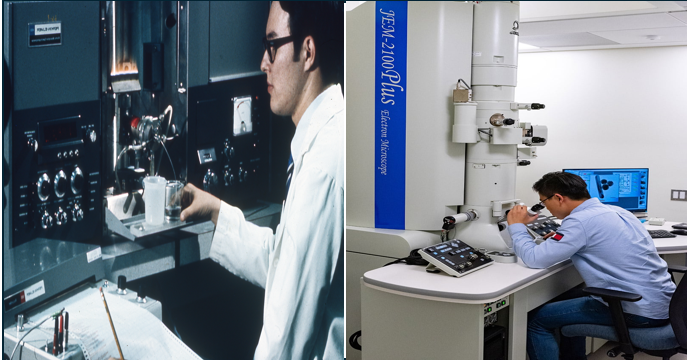
Mariano began his formal scientific education at the Universidad Complutense de Madrid, one of Spain’s most respected institutions. From the beginning, his professors recognized something exceptional—an analytical mind, relentless work ethic, and an unusual ability to connect complex ideas.
In the 1970s, he made a bold decision: to leave Spain and pursue advanced research in the United States. It meant leaving behind family, culture, and certainty. But he understood that transformative science demanded global exposure and access to the world’s most advanced laboratories.
In American research centers, his potential flourished. He wasn’t simply contributing to experiments—he was shaping them. His thinking was original, his questions fearless, and his focus absolute. He was becoming the kind of scientist whose work doesn’t just add knowledge—it changes the direction of an entire field.
The Discovery That Changed Cancer Research Forever
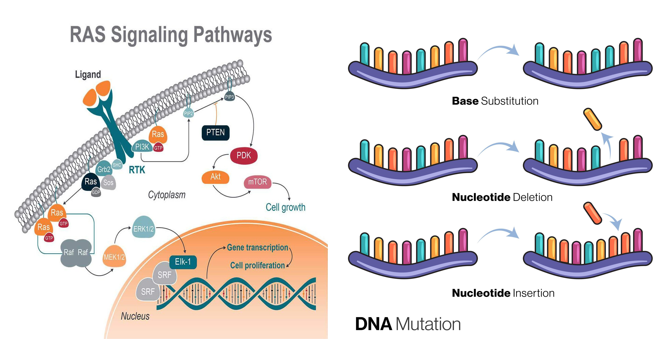
In 1982, Mariano made a discovery that would redefine modern oncology. He identified the first human oncogene—a mutated version of the RAS gene, a molecular switch that controls cell growth and division.
This discovery was revolutionary.
Until then, scientists did not fully understand how normal cells transformed into cancer cells at the genetic level. Barbacid’s work revealed that cancer could begin with specific genetic mutations, opening the door to targeted cancer therapies.
His research reshaped how the world understood cancer. Institutions across continents recognized his contributions. Awards followed. But despite global recognition, he remained grounded. His mission never changed: understand cancer at its roots—and stop it before it spreads.
The Road Back to Spain: Building a Scientific Legacy
After years in the United States, Barbacid returned to Spain with a vision larger than his own career. He became a founding leader of the Spanish National Cancer Research Centre (CNIO), transforming it into one of Europe’s most respected oncology institutions.
Under his leadership, the CNIO became a hub for cutting-edge cancer research. He trained generations of scientists, encouraged bold thinking, and built a culture where failure was part of discovery—not something to fear.
His philosophy was simple yet powerful:
Science must serve humanity.
Research must be fearless.
Progress requires discipline, creativity, and patience.
Through mentorship and leadership, he ensured that Spain would no longer just follow global science—it would help lead it.
The Recent Breakthrough: A Possible Turning Point in Pancreatic Cancer
Pancreatic cancer has long been known as a silent killer—aggressive, difficult to detect early, and historically resistant to treatment. Survival rates have remained devastatingly low for decades.
But Barbacid and his team chose to challenge the impossible.
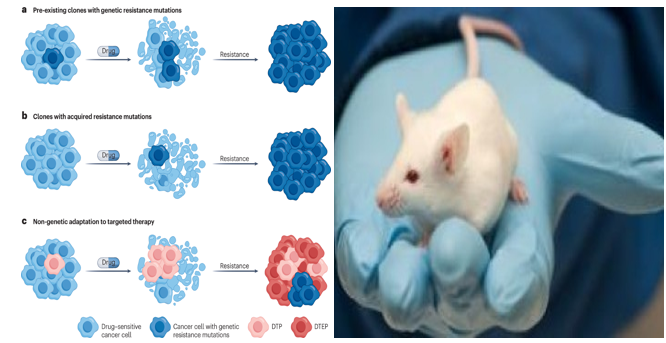
In recent laboratory studies, they tested a three-drug combination that successfully eliminated advanced pancreatic tumors in experimental models. Even more remarkable, the treatment showed low toxicity and no recurrence during the study period.
If future human trials confirm these results, the implications could be historic—potentially one of the most significant breakthroughs in cancer medicine this century.
This discovery is more than science.
It is hope.
Hope for families.
Hope for patients.
Hope for generations who may no longer see cancer as a death sentence.
A Face Marked by Battle, Not Defeat
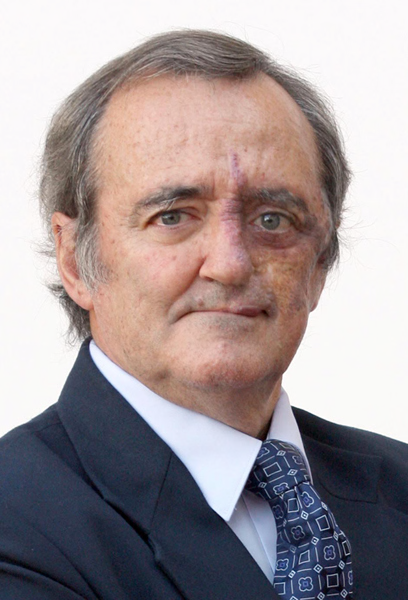
In a now-viral photograph, Dr. Barbacid appears with visible facial marks—likely the result of his own personal medical struggles. Some may see scars. But those who understand purpose see something far deeper.
They see strength.
They see survival.
They see resilience.
His face reflects a man who has faced suffering personally yet never stopped fighting for others. It tells the story of someone who understands pain—not as a concept, but as a lived reality.
And perhaps that is what makes his work even more powerful.
Legacy: A Life Devoted to Saving Lives
Today, Dr. Mariano Barbacid is more than a scientist.
He is a symbol.
A symbol of what happens when a human being dedicates an entire life to a cause larger than himself.
From a curious boy in Madrid to a global pioneer of cancer genetics.
From discovering the RAS oncogene to developing a promising pancreatic cancer therapy.
From personal battles to scientific triumphs.
His journey reminds us that real heroes don’t wear capes.
They wear lab coats—and they quietly change the fate of humanity.


